
















A great Kenyan coffee can make an ordinary morning brew feel far more interesting. The first sip often brings a lively, fruit-led character that is clean rather than heavy, followed by a sweetness that lingers nicely. Kenyan coffee flavour notes are known for being distinctive, but that does not mean every bag tastes identical. Origin, roast, freshness and how you brew it all have a real say in the cup.
For anyone who enjoys coffee with personality, Kenya is an excellent place to start. It can be bright without being harsh, complex without being difficult to enjoy, and satisfying whether you make it as a careful filter coffee or a quick morning cafetière.
What do Kenyan coffee flavour notes taste like?
Kenyan coffee is often recognised for juicy fruit flavours. Think blackcurrant, red berries, grapefruit, citrus peel and sometimes a wine-like acidity. You may also notice brown sugar, caramel, floral touches or a savoury, tomato-like sweetness in certain lots. That last note can sound surprising on paper, but in the cup it is usually part of the coffee’s lively, rounded character rather than a taste of a roast dinner.
The key word is brightness. In coffee, brightness describes a fresh, mouth-watering acidity that gives the flavour lift. It is closer to biting into a ripe berry or sipping fresh lemonade than it is to an unpleasantly sour drink. When balanced well, it makes a coffee feel vivid and clean.
That profile is quite different from a classic Brazil coffee, which often leans towards chocolate, nuts and a fuller body, or a darker roast that puts toasted, cocoa-like flavours first. If you usually choose smoother, low-acidity coffees, Kenyan coffee may feel more energetic at first. Give it a little time, though. Many drinkers find its fruitiness becomes the part they look forward to most.
Why Kenyan coffee tastes so distinctive
Kenya’s coffee-growing landscape plays a major role. Many coffees are grown at high altitude, where cooler conditions can help the coffee cherry develop slowly. This longer ripening period encourages concentrated sweetness and more layered flavour in the bean.
Growing regions around Mount Kenya and the Aberdare range are well regarded for their fertile volcanic soils and favourable climate. Coffee is commonly grown by smallholders and processed through co-operatives, with lots often separated carefully. That attention to sorting can make it easier for the character of a particular harvest or area to show through.
Processing matters too. Kenyan coffee is frequently washed, meaning the fruit is removed before the beans are dried. This tends to produce a crisp, clear cup, where berry and citrus notes are easier to pick out. A natural-processed coffee, by comparison, is dried with more fruit around the bean and can taste heavier, sweeter or more jam-like.
You may see Kenyan coffees described with grading names such as AA, AB or PB. These refer largely to bean size and shape, not a guaranteed flavour score. AA beans are larger, while peaberries are small, rounded beans containing one seed instead of the usual two. Both can make excellent coffee, but the roast, freshness and quality of the specific lot will matter more than the letters on the bag.
Kenyan coffee flavour notes by roast level
A coffee’s origin gives it a starting point. Roasting decides how much of that origin character reaches your mug.
Light roast: crisp fruit and floral detail
A light roast is often the clearest route to classic Kenyan character. Expect citrus, red berry, blackcurrant and tea-like floral notes, with a lively finish. It can be brilliant in filter coffee, pour-over or an AeroPress, especially if you enjoy tasting the differences between origins.
The trade-off is that light roasts can be less forgiving if brewed carelessly. Water that is too cool, a grind that is too coarse or an under-extracted brew may make the coffee taste thin or sharp. Use freshly boiled water left for a moment, and adjust your grind a little finer if the cup tastes sour.
Medium roast: fruit with more sweetness
Medium roasting brings extra caramel, toffee and biscuit-like sweetness while keeping much of Kenya’s fruit-led appeal. For many households, this is the sweet spot. The coffee remains bright and interesting, but feels rounder and easier to drink day after day.
It also works well across more brewing methods. A medium-roast Kenyan coffee can be very good in a cafetière, moka pot or bean-to-cup machine, and it has enough body to stand up to a small splash of milk. If you want to understand Kenyan coffee without making your routine more complicated, medium is a sensible place to begin.
Dark roast: deeper, bolder and less fruity
With a darker roast, the roast itself takes more of the lead. You are more likely to taste dark chocolate, toasted sugar and a fuller body, while delicate berry notes become quieter. That can be exactly right if you like a powerful coffee or mostly make milk-based drinks.
It is not necessarily better or worse. It simply depends on what you want. Choose lighter or medium roasts for fruit clarity; choose a darker roast when you prefer intensity, lower perceived acidity and a more traditional bold finish.
Getting the best from Kenyan coffee at home
The easiest way to enjoy a Kenyan coffee is to match the brew method to the flavours you want most. Filter coffee tends to show its sparkle and detail. A V60-style dripper, batch brewer or AeroPress can bring out berry, citrus and floral notes beautifully, particularly with a light or medium roast.
A cafetière produces a fuller, more textured cup. It may soften some of the sharper citrus detail and emphasise sweetness and body instead. Use a coarse grind, allow around four minutes of brewing, then pour soon after plunging so the coffee does not continue to sit on the grounds and become bitter.
For espresso, a medium or medium-dark Kenyan coffee is usually the more straightforward choice. Pure light-roast Kenyan espresso can be thrilling, but it needs careful dialling in and may taste intensely tangy if the shot runs too quickly. If you are using a home espresso machine, start with a slightly longer extraction than usual and make small grind adjustments until the flavour is sweet, juicy and balanced.
Milk changes the picture. A little milk can turn red-fruit acidity into something reminiscent of berries and cream, while a larger latte may cover the finer notes. There is no wrong answer here. If you take milk in your coffee, favour a medium roast and brew it a touch stronger than you would for black coffee.
Freshness is another simple win. Buy an amount you can comfortably use within a few weeks of opening, keep it in an airtight container away from heat and sunlight, and grind just before brewing where possible. Whole beans keep their character longer, but a good pre-ground coffee is still a convenient, enjoyable choice when speed matters.
Choosing a Kenyan coffee for your taste
If your usual choice is a bright Ethiopian coffee, Kenyan coffee may feel familiar in its fruitiness but often comes across as more structured and blackcurrant-led. If you normally drink Colombian coffee, expect a livelier cup with more citrus and berry notes. If you favour dark, smoky coffee, choose a darker Kenyan roast or try it as a stronger cafetière brew before deciding that Kenya is not for you.
It also helps to think about when you drink it. A light Kenyan filter coffee is an excellent slow weekend cup or a lively start to a work-from-home morning. A medium roast is easier to share with a household where everyone has a different preference. For a gift, Kenya is a strong choice for someone who enjoys trying coffees with a clear sense of place, rather than simply reaching for the same blend every time.
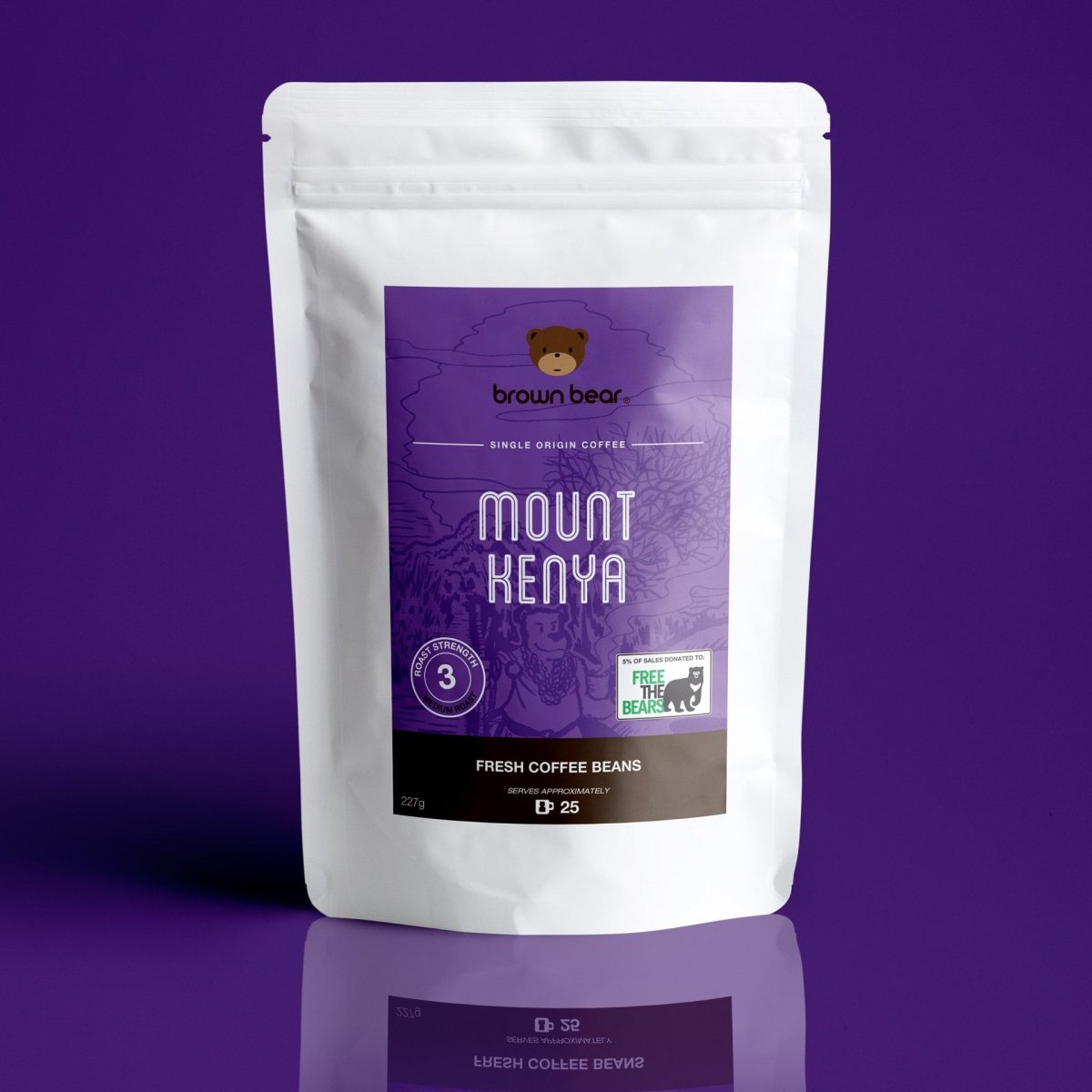
At Brown Bear, a Kenyan coffee can be a handy way to add variety to a regular coffee order without making the choice feel overly technical. Look at roast level first, then use the flavour description as your guide: berry and citrus for brightness, caramel for roundness, and darker cocoa notes for more intensity.
The best approach is to let your own taste lead. Brew a Kenyan coffee black once, even if you normally add milk, and notice the fruit, sweetness and finish. From there, you can adjust the roast, grind or method until those lively Kenyan flavours land exactly where you like them.

